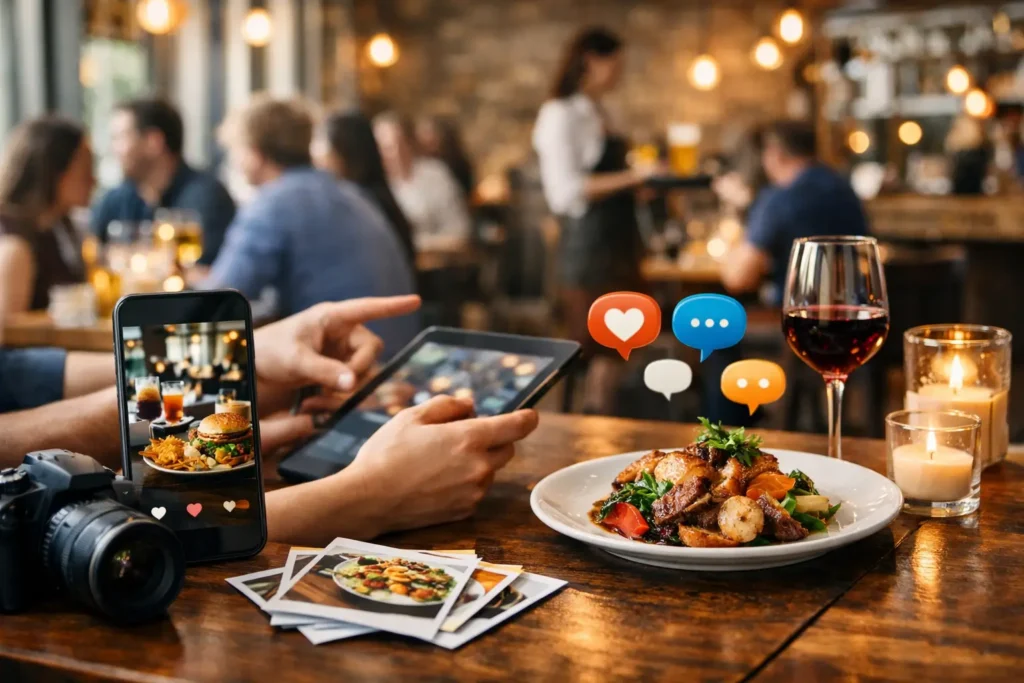
Friday at 5:30 p.m., a hungry customer opens Instagram and searches for somewhere worth leaving the house for. They are not looking for a generic stock photo, a blurry menu, or a page that has not posted since January. They are looking for a reason to choose you. A social media strategy for restaurants turns that split-second scroll into a reservation, an online order, or a table full of first-time guests.
Restaurants do not need to post constantly. They need to show up with a clear point of view, strong visual proof, and an offer that makes local diners act. The goal is not vanity metrics. The goal is packed seats, stronger check averages, repeat visits, private-event inquiries, and a brand people remember when the group chat asks, “Where are we going?”
Start With the Business Goal, Not the Content Calendar
A restaurant’s feed should reflect its actual growth priorities. A new cocktail program needs a different campaign than a neighborhood lunch spot trying to increase weekday traffic. A chef-driven destination restaurant may be selling reservations weeks ahead, while a fast-casual concept may need more online orders between 2 and 5 p.m.
Pick one primary objective for the next 60 to 90 days. It could be filling slow shifts, launching a seasonal menu, increasing catering leads, growing gift card sales, attracting tourists, or building loyalty among locals. That objective determines what you post, where you put paid budget, and what you measure.
Too many restaurants publish attractive food photos with no commercial direction. Beautiful content matters, but a plate of pasta alone does not tell people whether they should book tonight, bring their office party, or order delivery. Every campaign needs a job.
Define the guest you want more of
“Everyone who likes food” is not an audience. Identify the person most likely to improve the business right now. In Asheville and Western North Carolina, that might be locals looking for a dependable date-night spot, visitors building a weekend itinerary, parents seeking an easy dinner, or event planners who need a venue with polish.
Then get specific about what earns their attention. Visitors may need location cues, hours, parking details, and a clear sense of the experience. Locals may respond to a recurring special, a familiar staff face, or a reason to return after they have already tried the menu. The right message depends on the guest and the moment.
Build a Social Media Strategy for Restaurants Around Proof
Restaurant marketing is sensory. Social media has to make a person imagine the first bite, the room’s energy, and the convenience of saying yes. That means your content should prove the experience instead of merely claiming it is great.
Prioritize video. A short clip of steam rising from a fresh dish, a bartender finishing a cocktail, a packed patio at golden hour, or a server explaining a special can outperform a polished graphic because it feels real. It gives prospective guests evidence that the restaurant is active, desirable, and worth their time.
Photography still has a major role, especially for menu highlights, branded interiors, chef portraits, and announcements. But avoid turning every post into a menu catalog. People follow restaurants for appetite, personality, local relevance, and useful reasons to visit.
Your content mix should consistently cover four areas:
- Crave: Signature dishes, drinks, desserts, preparation, and seasonal ingredients.
- Experience: Atmosphere, music, staff, service, guests, views, and the small details that make the restaurant distinct.
- Reason to act: Reservations, limited specials, events, happy hour, catering, holiday menus, and online ordering.
- Trust: Guest feedback, media mentions, community involvement, chef expertise, sourcing stories, and behind-the-scenes standards.
The balance matters. If every post sells, the account becomes easy to ignore. If every post is purely aesthetic, it becomes a missed revenue opportunity. A strong feed creates desire and then gives people a clear next step.
Make local relevance visible
For independent restaurants, local social media is a competitive weapon. Use location tags, neighborhood references, regional ingredients, local partnerships, and event-based content that makes the business part of the community conversation. A restaurant in downtown Asheville should not sound like a national chain with a generic caption template.
This does not mean forcing local slang or posting about every festival in town. It means understanding the rhythm of your market. When tourists arrive, show them why the stop is worth it. When locals need a midweek reset, give them an easy reason to come back. When a nearby event drives foot traffic, create content and offers that match the opportunity.
Choose Platforms Based on How Guests Buy
Instagram remains a powerful discovery engine for visual restaurants, particularly for Reels, Stories, direct messages, and location-based browsing. TikTok can create major reach when the food, personality, or process has a natural hook. Facebook still matters for many community-driven restaurants, events, older local audiences, and paid targeting.
The mistake is treating every platform as an obligation. A small team with limited content capacity should win on one or two channels before spreading effort across five. Consistency and quality beat a neglected presence everywhere.
Google Business Profile also belongs in the conversation, even though it is not a traditional social channel. Guests frequently make decisions from photos, reviews, hours, menu information, and updates shown in local search. If your social content makes people curious but your search presence is outdated, you are creating friction right before conversion.
Turn Every Post Into a Clear Path to Revenue
A caption does not need to sound like a hard sell. It does need to tell people what to do. Ask for the reservation. Direct them to order. Encourage them to save a date. Invite them to inquire about a private event. Mention the time limit on a special when urgency is real.
Use calls to action that fit the content. A video of a weekend-only entree can say, “Available Friday through Sunday. Reserve your table before service fills.” A catering post can say, “Planning an office lunch or holiday gathering? Send us a message with your date and guest count.” Clear beats clever when money is on the line.
Make conversion easy outside the post, too. Your bio, buttons, menu links, booking tools, and contact details should be current. If a guest has to hunt for your hours or cannot tell whether you take reservations, the momentum disappears.
Use paid social to amplify what already works
Organic reach is valuable, but it is not a complete growth plan. Paid social gives restaurants control over who sees an offer, especially when promoting events, seasonal launches, catering, gift cards, or new locations.
Do not boost every post because it got a few likes. Put budget behind creative that already shows strong signals: people watch it, save it, share it, comment with intent, or click for details. Then target practical audiences around your service area, past customers where permitted, and people with relevant interests. The right radius depends on the concept. A quick-service lunch spot may need a tight local radius; a destination dining experience can target visitors planning a trip farther out.
Track the result beyond reach. Look at reservation clicks, website visits, direction requests, messages, online orders, catering inquiries, and promotional code use. Some restaurant sales happen offline, so pair platform data with point-of-sale trends, booking data, and staff feedback. If Wednesday traffic rises after a focused campaign, that is more meaningful than a viral post with no measurable lift.
Create a Production System Your Team Can Maintain
The best strategy fails when it depends on a manager filming random clips between lunch service and a broken ice machine. Build a realistic production rhythm. A focused monthly content session can capture enough food, drink, staff, interior, and short-form video assets to support several weeks of publishing.
Plan around the restaurant calendar: menu changes, holidays, ticketed events, local weekends, sports, weather shifts, and known slow periods. Leave room for spontaneous content because a busy dining room, a surprise special, or a visiting chef can create timely momentum.
Give staff simple guardrails. They should know what is appropriate to film, which dishes are presentation-ready, how to flag a guest story, and where to send usable footage. Not every employee must become a creator. But the team can become a powerful source of authentic moments when the process is clear.
Respond Like the Brand Is Open for Business
Social media is not a billboard. It is a front door. Reply to questions about hours, dietary needs, reservations, and events promptly. Thank guests for positive mentions. Address criticism with composure, not defensiveness. A public response will not fix every complaint, but silence can make an attentive restaurant look careless.
The same standard applies to comments and direct messages. A guest asking whether the patio is dog-friendly may be deciding where to go in the next hour. Fast, helpful answers win business that never appears in an analytics dashboard.
Measure What Moves the Restaurant Forward
Review performance monthly, not just when a post takes off. Identify the content that produces saves, shares, messages, booking clicks, profile visits, and real guest questions. Then look for patterns. Maybe chef-led videos create trust, cocktail content drives Friday reservations, or staff-led Stories make locals feel connected.
Do not confuse reach with failure or success. A widely viewed video can be valuable for awareness, while a smaller local campaign may drive more immediate revenue. The strongest social media strategy for restaurants uses both: attention-building content to expand demand and conversion-focused content to capture it.
Your restaurant already has stories worth showing. The opportunity is to stop treating social media as an afterthought and start using it as proof that your doors are open, your experience is distinct, and the next great meal should happen at your table.



Comments are closed.